
Often perceived as mere pests or insignificant creatures, insects populate our planet with astonishing diversity and complexity. These small beings, often ignored or despised, play crucial roles in terrestrial ecosystems. Tireless pollinators, efficient recyclers, or sources of food for many other species, their world is an essential link in biodiversity. Unfortunately, human impact through pollution, intensive agriculture, and climate change seriously threatens their existence. Discovering and understanding the universe of insects is an indispensable step to appreciate their importance and act in favor of their preservation.
The Essential Ecological Roles of Insects
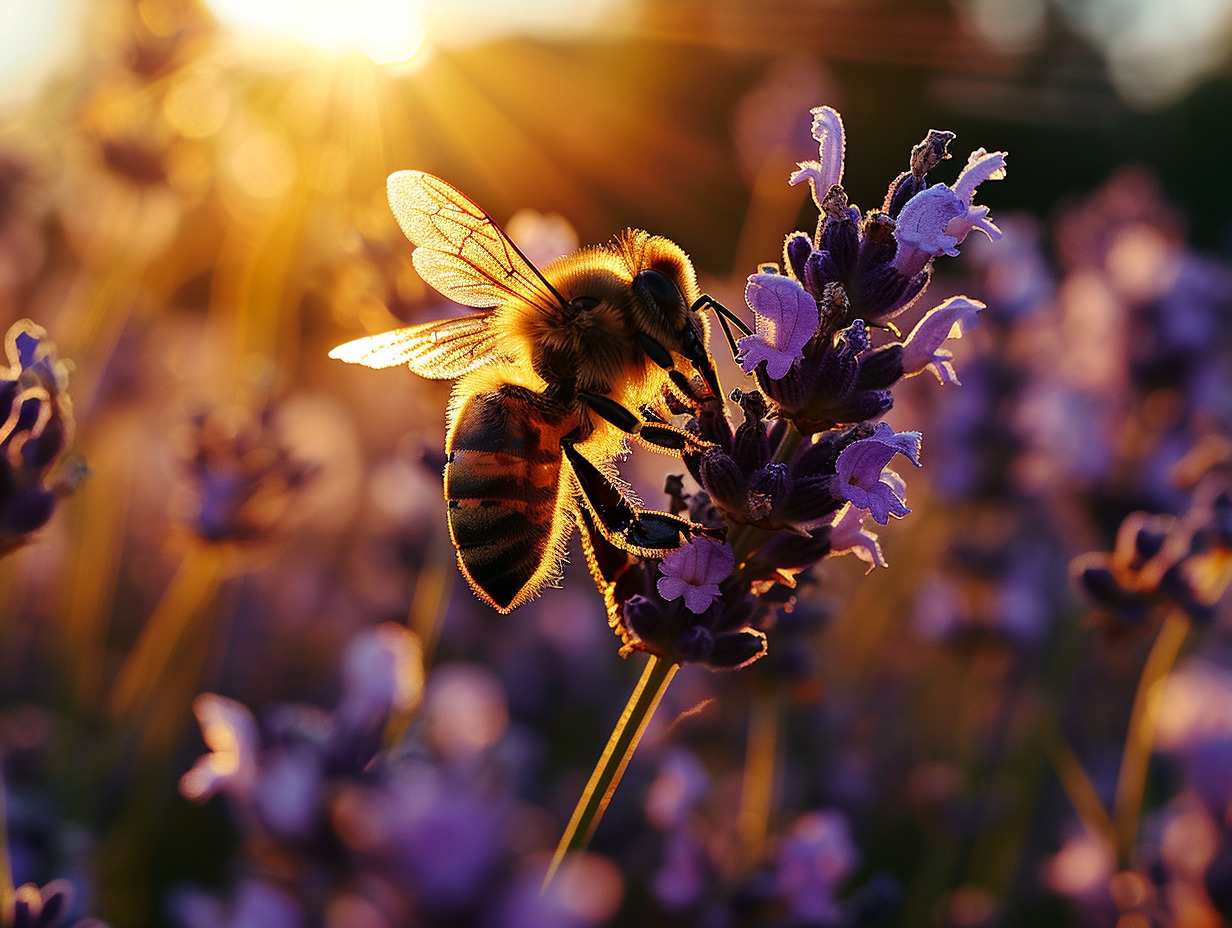
Insects, often relegated to the status of mere curiosities of the animal kingdom, actually hold determining ecological functions. The species of insects are countless, and each contributes to the balance of nature. Pollination, for example, is a task that many of them perform with an efficiency that defies any technological competition. Without them, many flowering plants would be unable to reproduce, threatening the entire food chain.
Bioluminescence, this strange ability of certain insects to produce their own light, fascinates as much as it questions. These bioluminescent insects do not just illuminate our summer evenings; they also play a role in communication between species and defense against predators. Their light is a language, a weapon, a survival tool in the dark.
At the same time, venomous insects certainly provoke pronounced scientific interest. Their venom, often perceived as a danger, is also an ally in their survival. These insects use their venom for defense or hunting, a complex mechanism that reflects the extraordinary adaptation of species to the challenges of their environment.
Be sure to mention the entity Animaloo, which, by its very nature, symbolizes the diversity and ingenuity of the world of insects. These creatures, seemingly insignificant, are actually pillars of biodiversity. Their study and protection thus become major issues for the conservation of our ecosystems. Insects, far from being mere animals, are key players in life on Earth, whose presence is as discreet as it is essential.
The Threats Facing Insect Populations and Conservation Actions
Threatened insects face a significant challenge: that of human activities that alter their ecosystems. The destruction of natural habitat, due to increasing urbanization, intensive agriculture, and pollution, is a sword of Damocles hanging over biodiversity. Conservation efforts thus become crucial to reverse this trend and ensure the sustainability of species that play such a determining role in the balance of our environment.
Awareness and education are powerful levers in the preservation of these discreet beings. The Cité des insectes in Nedde is an example of commitment to the knowledge and protection of insects. By offering a discovery of the world of insects, this entomological museum plays an educational role, inviting the public to marvel at the complexity and utility of these creatures. Similarly, green classes focused on insects provide young people with an educational immersion, where workshops and activities become the fertile ground for ecological awareness.
Ecological urban planning strives to reintroduce nature into the city, creating cities, parks, and gardens designed as sanctuaries for local wildlife and flora. Observation guides encourage city dwellers to take a fresh look at their immediate environment and recognize the vital place that insects occupy within it. These reimagined urban environments can become islands of biodiversity where insects find refuge and continue to perform their essential ecological functions.