After a fall in the bathroom or unusual shortness of breath when climbing stairs, we realize that the body after 60 sends signals that can no longer be ignored. Preserving health and well-being at this age relies less on major upheavals and more on concrete adjustments applied daily over time.
Fragility after 60: spotting the signals before a fall
Competitors talk about diet and physical activity. We start from an angle they skim over: fragility, a reversible state if detected early.
The French Society of Geriatrics and Gerontology has updated its recommendations on spotting fragility after the Covid period. This detection is based on signs that can be observed by oneself: unintentional weight loss, persistent fatigue, slowing of walking. Just one of these signals justifies discussing it with one’s doctor.
In practical terms, we can regularly monitor a few points. Is walking speed decreasing on a usual route? Is grip strength declining (difficulty opening a jar, for example)? These indicators, combined with medical follow-up, allow for action before hospitalization becomes necessary. Many practical benchmarks can be found on the health section of Magazine Seniors, which addresses these topics in an accessible format.
Adapted physical activity: starting from a real constraint
General recommendations suggest moving every day. In reality, the situation differs. Knee osteoarthritis, a hip prosthesis, or a heart condition change the game. The goal is not to check a box but to find movement compatible with one’s own body.

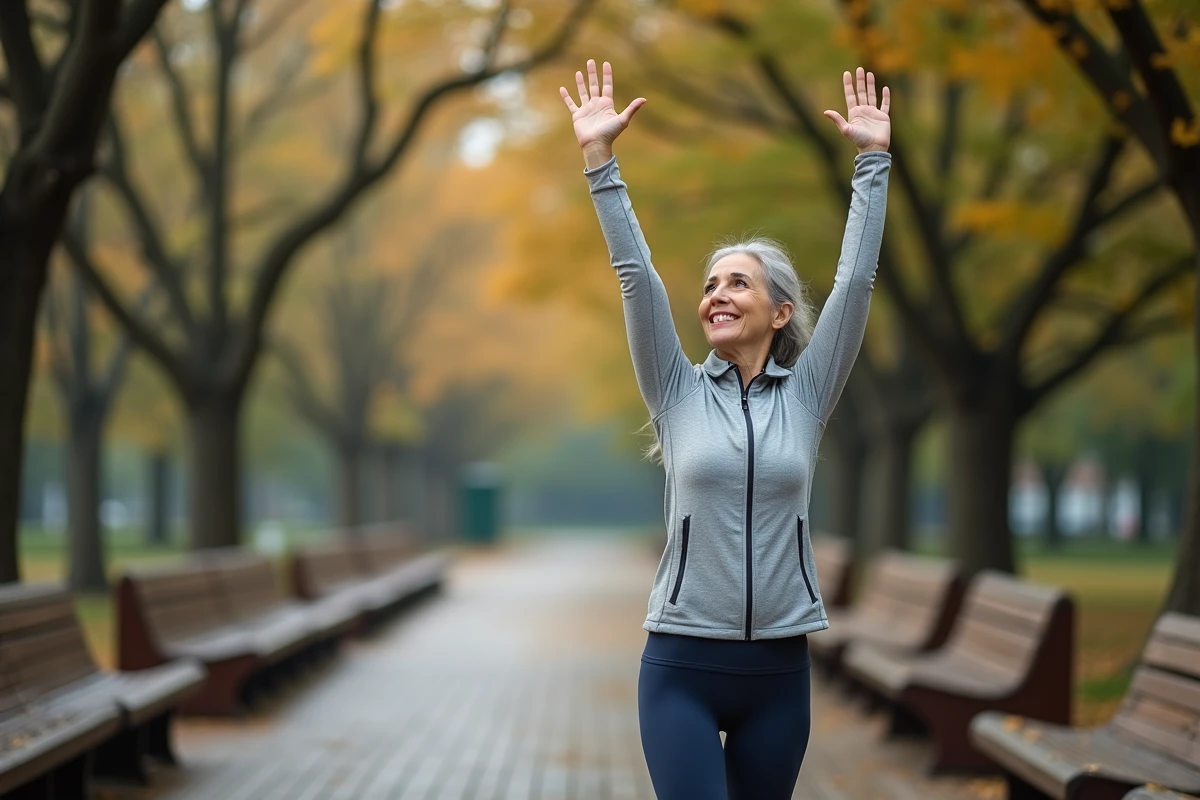
Three senior physical activities that protect balance
- Fast walking on flat terrain, doable without equipment, engages the cardiovascular system without violent impact on the joints. A few dozen minutes per outing are enough to maintain breath.
- Tai chi or gentle yoga work on balance and proprioception, two abilities that decline with age and increase the risk of falling.
- Light muscle strengthening exercises (resistance bands, body weight) slow down muscle loss, known as sarcopenia, which accelerates the loss of autonomy.
The idea is not to aim for performance. We seek regularity: a few sessions per week, even short ones, are better than an intense effort on the weekend followed by a week of inactivity. Feedback varies on the optimal duration, but consistency is more important than volume.
Alcohol after 60: the end of the protective glass myth
For decades, we heard that a glass of wine a day protected the heart. This idea no longer holds. Recent meta-analyses, supported by Mendelian randomization tools, have led the WHO to remind in its report on alcohol and health that there is no level of alcohol consumption without risk, including for seniors.
After 60, the liver metabolizes alcohol more slowly. Interactions with medications (anticoagulants, antihypertensives, sleeping pills) multiply adverse effects. Reducing or eliminating alcohol produces measurable benefits on sleep, blood pressure, and walking stability.
Renouncing care and precariousness: an invisible barrier to senior well-being
This topic is rarely discussed in senior health guides, but it weighs heavily. Studies from DREES and Health Insurance show that an increasing share of retirees in France live on limited incomes. The consequences are direct: postponements of consultations, renunciation of hearing aids, dental or optical care.
Limiting heating to reduce bills worsens joint pain and respiratory infections. Not replacing ill-fitting glasses increases the risk of falling. These renunciations create a cycle where health deteriorates faster than age alone would explain.

Concrete steps to limit non-use of care
- Check rights to complementary health insurance (ex-CMU-C), underutilized by retirees who are eligible.
- Request an annual hearing and vision assessment: these services are covered or reimbursed under the 100% health plan.
- Contact CCAS (communal social action centers) for heating assistance and housing adaptation, two direct levers on daily health.
Sleep and natural light: an underestimated lever after 60
Sleep changes with age. We fall asleep earlier, wake up earlier, and deep sleep phases shorten. Rather than fighting against this rhythm, we can support it.
Exposure to natural light in the morning resets the biological clock. Going outside within the first hour after waking, even on a cloudy day, is enough to stabilize the wake-sleep cycle. Conversely, screens in the evening delay falling asleep by blocking melatonin secretion.
On the stress and mental health side, sleep quality acts as an amplifier. Fragmented sleep increases irritability, reduces concentration, and weakens immune defenses. Maintaining a regular bedtime routine, even on weekends, remains the simplest and most effective gesture.
Preserving health after 60 is not just a list of good dietary habits. Spotting the first signs of fragility, adjusting physical activity to real constraints, reviewing alcohol consumption in light of current data, and not renouncing care due to lack of information about rights: these four axes, taken together, concretely change the trajectory of aging.