When a truck driver hits the road for several days, their loved ones do not see the fatigue building up, the crowded rest areas, or the deteriorating weather conditions. They only perceive a silence between two calls. Real-time tracking of trucks transforms this silence into concrete information, and this information changes the quality of sleep for those who stay at home.
Fatigue alerts and fleet tracking: what loved ones didn’t see before
Before onboard tracking systems, the only information available to a family was the last message received. A text at midnight, then nothing until morning. In between, the imagination fills the void.
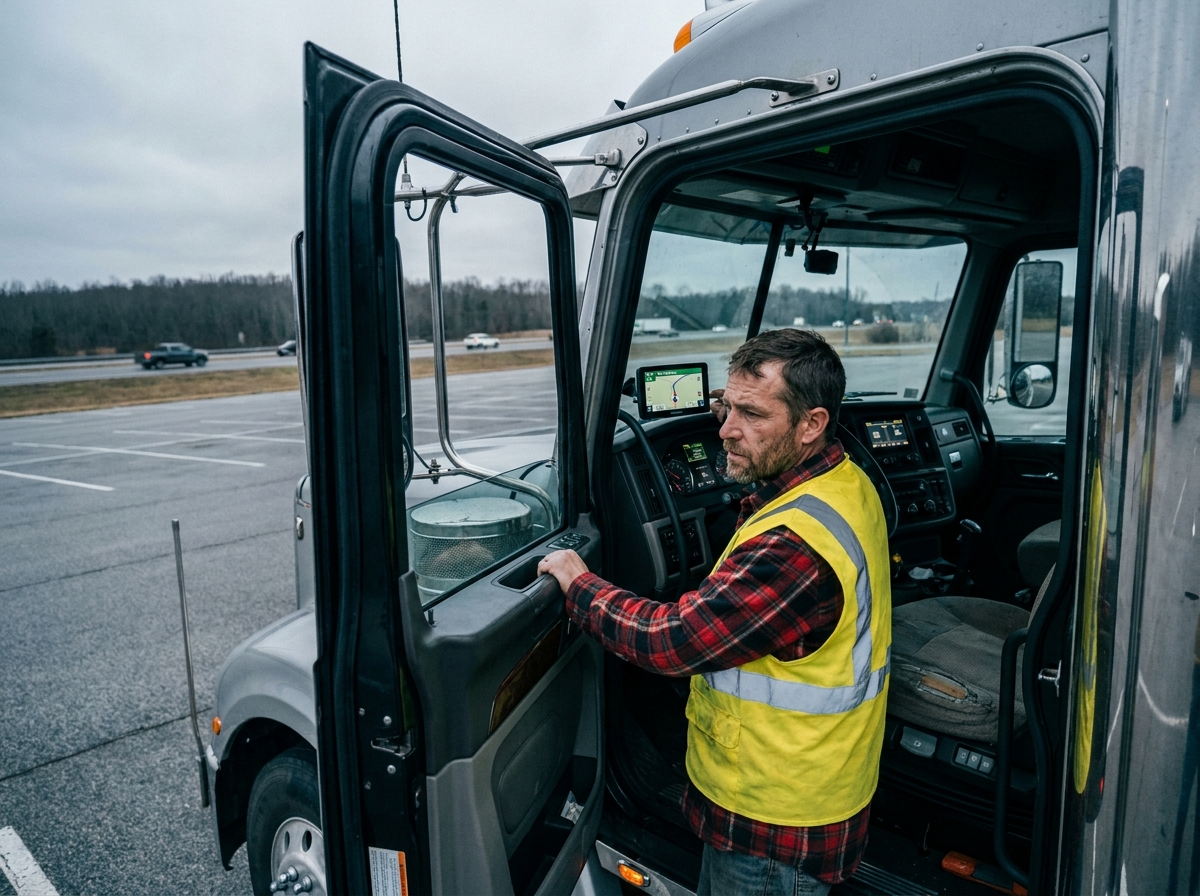
Current fleet management platforms change the game. They record the vehicle’s position, speed, stops, and transmit this data to the manager. Some systems integrate Driver Monitoring Systems (DMS), cameras that analyze signs of driver fatigue in real-time: prolonged blinking, head movements, micro-sleeps.
When a critical event is detected, an alert is immediately sent to the fleet manager. The driver is notified, sometimes by a seat vibration or an audible signal. Recent field studies on heavy truck fleets show that the integration of these DMS significantly reduces micro-sleeps and fatigue-related accidents on long-distance trips.
The truck geolocation also allows for anticipating risk areas and planning breaks more reliably, benefiting both the driver and their family.
Driver rest and family rest: a direct link often overlooked
A survey conducted by the Raymond-Poincaré Hospital in Garches as part of the VINCI Autoroutes Foundation program revealed a striking figure: more than one in four truck drivers sleeps less than six hours the night before a long trip. Nearly one in three believes they are likely to have an accident due to drowsiness.
These data are sensed by families without them knowing. They know that their partner or parent gets up at three in the morning, that they sometimes drive for ten hours straight, and that breaks are not always taken as they should be.
Real-time tracking objectifies what loved ones intuitively fear. If the system detects that the driver has been driving for too long without a break, the fleet manager can intervene. This layer of external monitoring acts as a safety net, and this net provides reassurance.
The difference between knowing and imagining
The nighttime anxiety of truck drivers’ loved ones does not come from an immediate danger. It comes from the absence of information. The human brain, faced with uncertainty, produces negative scenarios. A phone that doesn’t ring at the expected time triggers a very real rise in stress.
When a family can verify that the truck is parked at a rest area, or when they receive a notification indicating that the driver has taken their mandatory break, the disaster scenario loses its power. Sleep returns more quickly.
Reliability of drowsiness alerts while driving: a current regulatory issue
Are you wondering if these alert systems are reliable? The question is legitimate, and authorities are asking it too.
In the United States, the NHTSA (National Highway Traffic Safety Administration) has recently launched research to define robust metrics for evaluating the reliability of onboard drowsiness alerts. In Europe, national trials involving major fleet operators are testing the performance of DMS in real conditions.
The goal is clear: to transform these devices into scientifically validated standards, not just commercial arguments. For loved ones, this regulatory approach gives weight to the technology. The system that monitors their truck driver is not a gadget, but a tool subject to evaluation protocols.

What these systems concretely monitor
The DMS coupled with fleet telematics are not limited to a single sensor. Here are the elements analyzed in real-time:
- The driver’s eye movements, particularly the frequency and duration of blinks, to detect micro-sleep phases before they become dangerous.
- The position of the head and gaze, which reveals a decrease in attention or gradual drowsiness.
- Driving data (trajectory, accelerations, sudden braking), cross-referenced with biometric data to distinguish true fatigue from a simple head movement.
- The duration of continuous driving and compliance with mandatory break times, with automatic alerts in case of violations.
GPS tracking of trucks and family peace of mind: a tangible daily benefit
Real-time tracking is not limited to fatigue alerts. It also covers everyday situations that generate anxiety for loved ones.
A delivery delay, for example, can mean a traffic jam, a breakdown, or an accident. Without information, the family worries. With access to GPS tracking (even indirectly, via an automated message), they know that the truck is stuck on the highway, not in a ditch.
Reducing anxiety comes from reducing uncertainty. And that is exactly what onboard telematics produces.
A cultural shift in road transport
For a long time, the trucking profession has been practiced in a form of accepted isolation. The driver would leave, drive, and return. The family would wait. Tracking tools change this dynamic without removing the driver’s autonomy.
The fleet manager has an overview. The driver retains their driving decisions. The family, meanwhile, comes out of the blind spot. This rebalancing of information does not solve everything, but it addresses a specific point: the anxiety related to the lack of news during nighttime driving hours.
Truck drivers’ loved ones sleep better when they know that someone, or something, is watching over them. Technology does not replace the evening call, but it fills the hours of silence that separate two phone rings.