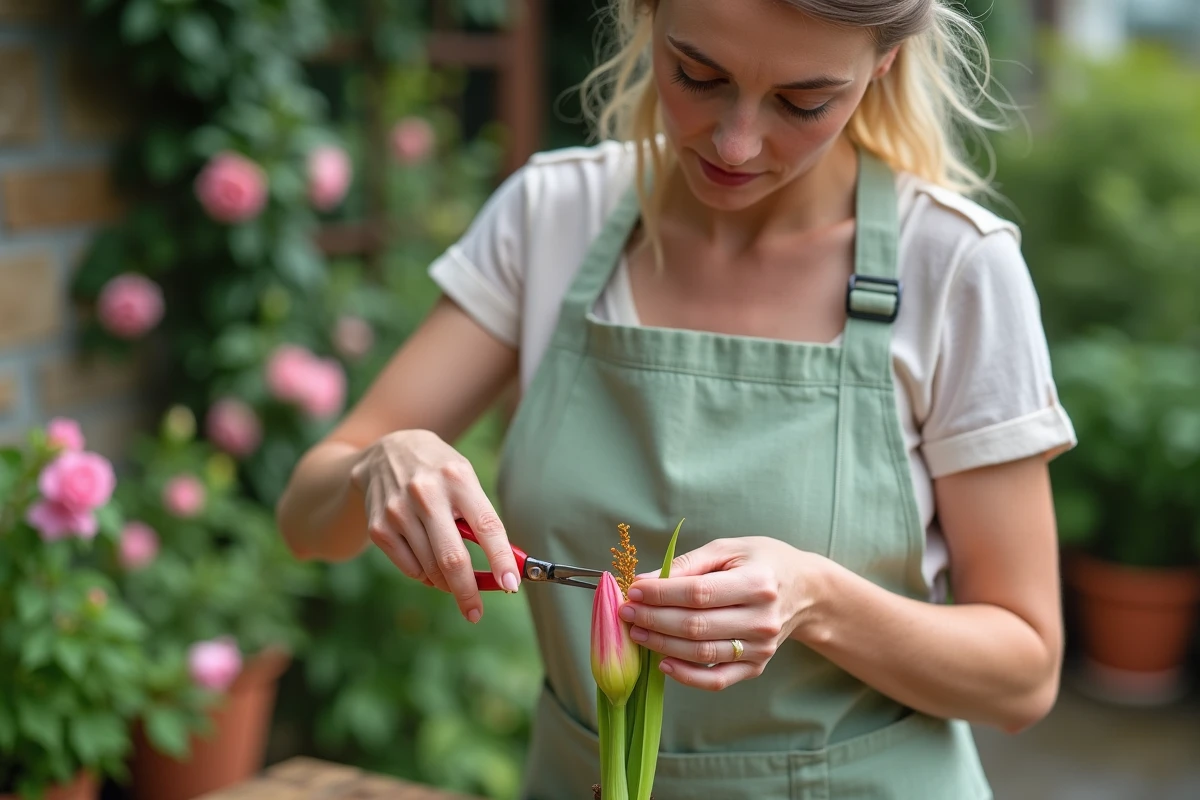
We receive a bouquet of lilies, we place it on the living room table, and two days later an orange powder has stained the tablecloth, the petals, and sometimes the cat that was sleeping nearby. The problem comes from the stamens, those little stems that carry the pollen at the center of the flower. Cutting the pistil of the lilies (and especially the stamens, often confused with it) prevents this damage and prolongs the bouquet’s lifespan.
Stamens and pistil of the lily: what we really cut
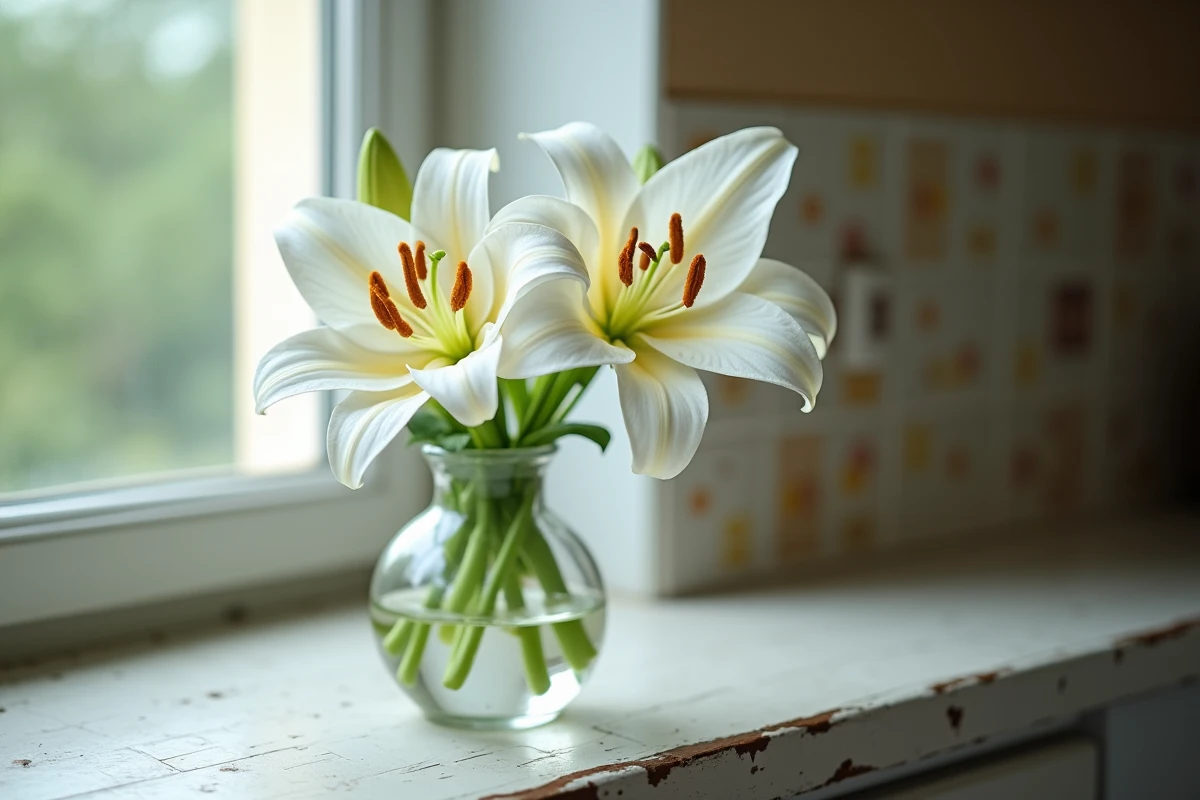
The confusion is common. We talk about “cutting the pistil,” but in practice, it is the stamens that should be removed as a priority. The pistil is the female organ, located at the center of the flower, ending with a slightly sticky stigma. The stamens, on the other hand, are the six filaments arranged around the pistil, each topped with an anther loaded with pollen.
It is this pollen that poses a problem. Highly pigmented, it permanently stains textiles, light surfaces, and the petals themselves. By removing it, we also eliminate the pollination signal that the flower perceives: it “thinks” it has not been fertilized and remains open longer.
You can also remove the pistil for aesthetic reasons, particularly in wedding floral arrangements where even the slightest trace of pollen on a white dress would be a disaster. A practical guide allows you to easily cut the pistil of lilies by following the right method, step by step.
Florist method for removing stamens without pollen stains
The natural reflex is to pull the stamens off by hand. This is the worst approach. The friction releases the pollen onto your fingers, which then deposits on the petals, the vase, the table. Professional florists have standardized a simple protocol to avoid this scenario.
The right timing
We intervene as soon as the flower opens, before the pollen is fully mature. At this stage, the anthers are still slightly closed and the pollen remains compact, less volatile. On a bouquet purchased with barely opened buds, we monitor each flower and act as soon as the petals part enough to access the center.
The action with the pruner
We use clean scissors or a small pruner. We cut each stamen at the base of the filament, without pulling or twisting. The movement is clean, vertical, and the hand holding the tool never touches the anther.
- Cut the six stamens one by one while holding the flower stem with the other hand to stabilize the corolla
- Let the cut stamens fall directly into a bowl or onto newspaper, not on the table
- Clean the pruner blade between each flower if any pollen has settled on it, to avoid transferring it to the next petals
- Never blow on residual pollen (it disperses further), prefer a piece of tape gently pressed onto the petal
This protocol takes less than a minute per flower. On a bouquet of five stems each bearing two to three open flowers, it takes just a few minutes.
Lilies and cats: pollen as a real danger
Beyond aesthetics, removing the stamens from lilies addresses an animal safety issue. Lily pollen is toxic to cats, even in very small amounts. A cat that rubs against a bouquet, then licks its fur, ingests enough particles to cause acute kidney damage.
The risk is not limited to pollen. The leaves, petals, and vase water also contain harmful substances for felines. Removing the stamens reduces exposure to volatile pollen, but if you have a cat, the most reliable precaution remains not to bring lilies into the house. Experiences vary on this point: some households remove the stamens and place the vase out of reach without incident, while others prefer to eliminate all risk.
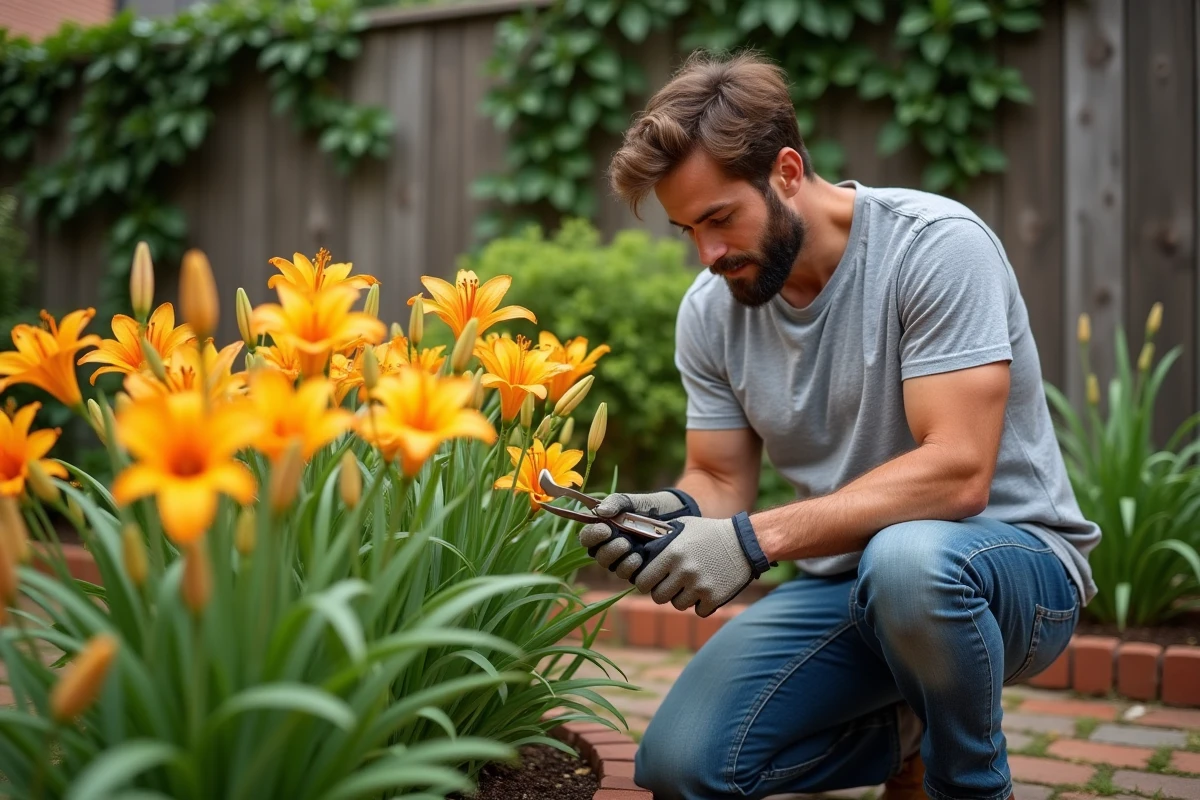
Lily pollen stains on clothing and surfaces: how to tackle them
Even when applying the right method, it can happen that an anther bursts at the wrong moment. The reflex to rub the stain with a damp cloth is counterproductive: water sets the pigment into the textile fiber.
Dry technique first
We start by letting the pollen stain dry completely. Once dry, the powder detaches more easily. We use wide adhesive tape, applied and then peeled off several times, to lift the grains without crushing them into the fabric. On a hard surface (countertop, lacquered furniture), a dry microfiber cloth is usually sufficient.
Sun exposure
For white or light textiles, exposing the stained area to direct sunlight degrades the pigment of lily pollen within a few hours. This is not a universal remedy, but on cotton or linen, the results are often clear. We then wash normally.
On the petals of the lily itself, a pollen stain is permanent. Hence the importance of intervening before the anthers mature: once the pollen is released onto a white petal, no technique can remove it without damaging the flower.
Removing the stamens from a lily involves three actions with the pruner that change the bouquet’s lifespan, protect the surfaces around the vase, and reduce a toxic risk for pets. The pistil can remain or be removed depending on the desired effect. The priority action focuses on those six small orange anthers that concentrate all the problems.