The PVC of an inflatable spa does not withstand repeated chemical aggression well. The Intex PureSpa 2024 and Bestway Lay-Z-Spa 2023 manuals explicitly discourage the use of concentrated or pure bleach to clean the tub, as it alters the welds and seals in the medium term. Despite this warning, bleach remains the most accessible and widely used product by individuals to disinfect an empty spa between two fillings.
The question is not whether to ban bleach, but to understand under what conditions its use remains compatible with the lifespan of the vinyl coating.
Bleach and PVC of inflatable spas: what customer service feedback reveals
The customer service FAQs of major specialized retailers (Cash Piscines, Piscinistes.fr, updated 2023-2024) report a notable increase in wall deformations and coating peeling on inflatable spas two to three years old. The common factor among these cases: regular cleanings with pure bleach or prolonged soaking with overly concentrated chlorinated solutions.
The mechanism is gradual. The active chlorine in bleach first attacks the plasticizers in the PVC, those additives that give the coating its flexibility. The material then becomes brittle, discolors in patches, and eventually micro-cracks at the folds. The thermal welds between the panels of the tub are the first to be affected, as they concentrate mechanical stresses.
Knowing how to clean an empty inflatable spa with bleach therefore requires mastering dilution and contact time, two parameters that most online tutorials overlook.
Dilution and type of bleach: the two variables to control
Choosing the right bleach
Not all bleach is suitable for this use. The technical recommendations from French bleach manufacturers published since 2023 specify that one should use bleach without detergent additives or fragrance, of the simple “household bleach” type. Scented or surfactant-enriched versions leave a residual film on the vinyl, difficult to rinse off, which accelerates discoloration in sunlight.
Preparing the solution
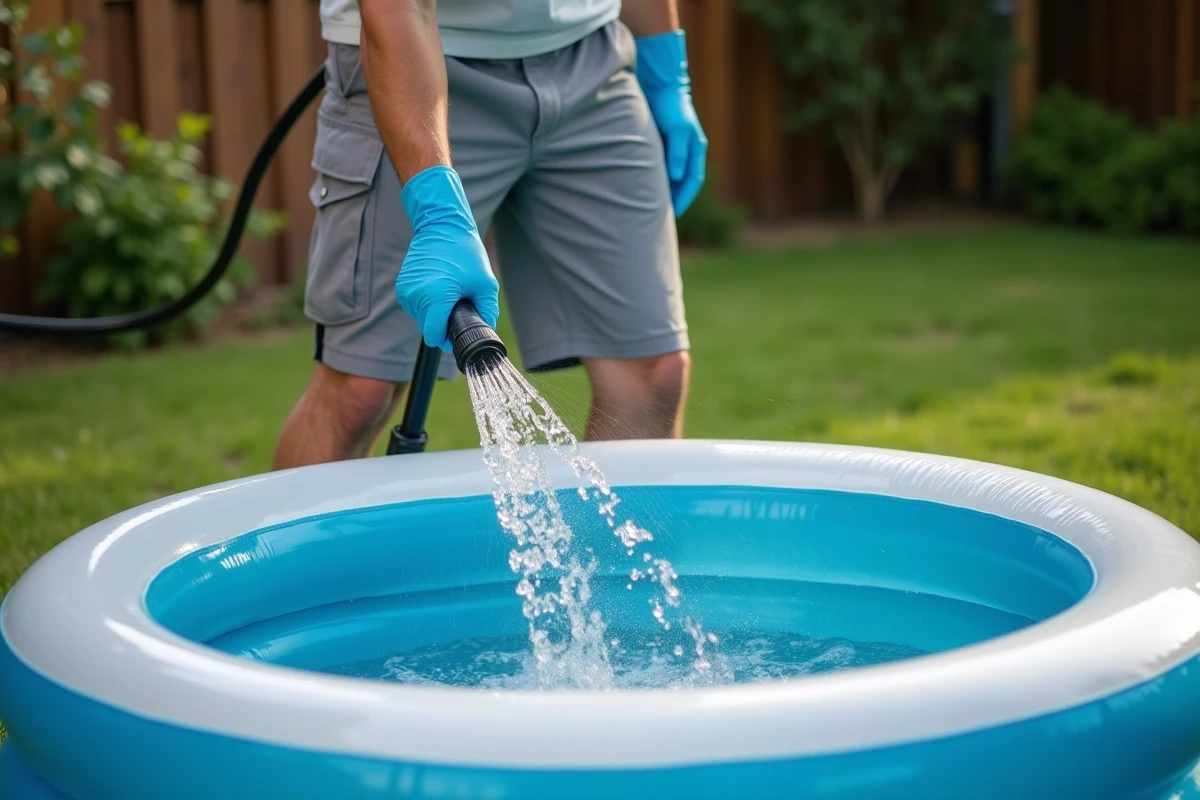
Common household bleach typically contains around 2.6% active chlorine. For cleaning an inflatable spa, the logic is to go well below this concentration. Specialized distributors that tolerate the use of bleach recommend a dilution in a significantly larger volume of water, in order to obtain a lightly chlorinated solution.
- Pour the bleach into the water (never the other way around) to avoid splashes of concentrated product on the coating
- Use cold or lukewarm water, as heat degrades active chlorine and produces irritating vapors
- Never mix bleach with white vinegar, baking soda, or another acidic product, as it may release gaseous chlorine
This diluted solution is applied with a soft sponge, section by section. Soaking the entire tub in a chlorinated bath, sometimes suggested on forums, is precisely the practice that customer service feedback points out as the most destructive.
Cleaning protocol for an emptied inflatable spa
Cleaning with bleach only makes sense on a spa that has already been drained and cleared of surface impurities. Before any chemical application, a wipe with a damp sponge is enough to remove the greasy biofilm that coats the waterline and the bottom of the tub.
Local application and limited contact time
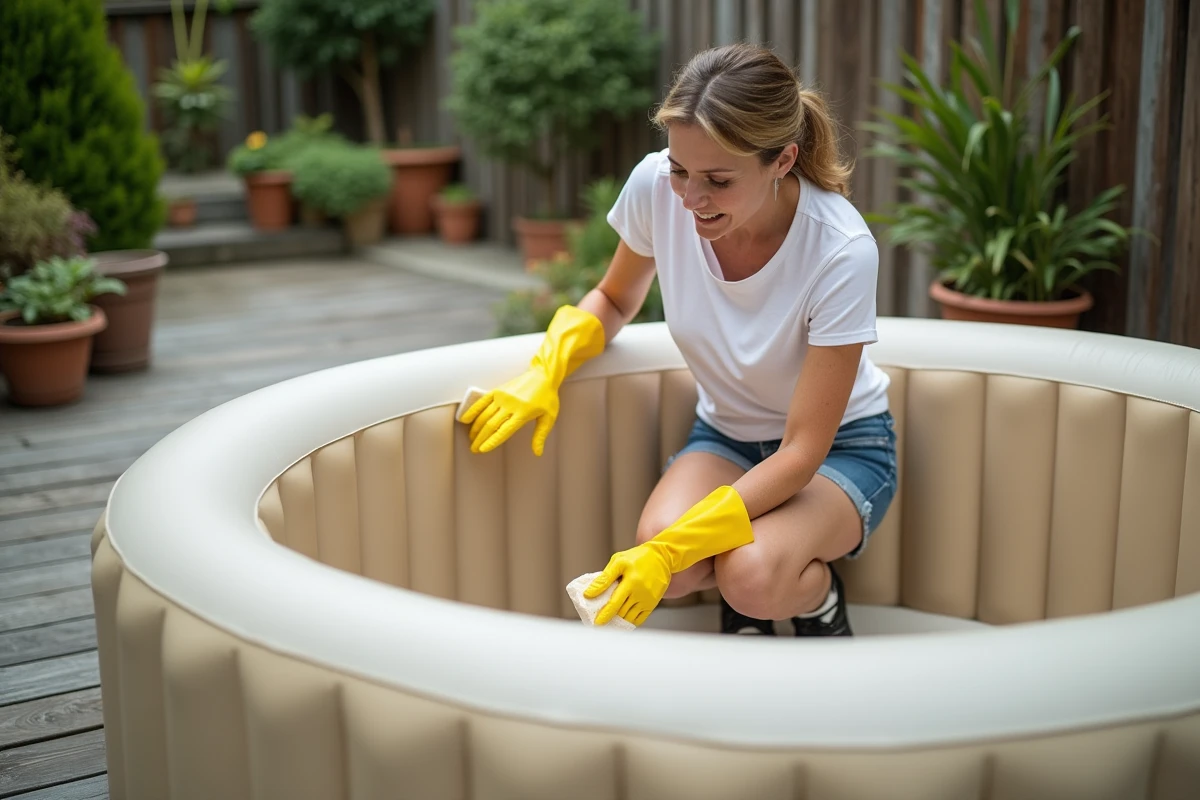
Pool retailers documenting this practice emphasize one point: bleach must be applied locally, quickly, and rinsed immediately. The action consists of soaking a non-abrasive sponge with the diluted solution, scrubbing the targeted area (stain, limescale deposit, budding mold), and then rinsing with clear water right away.
The contact time should not exceed a few minutes. Beyond that, chlorine begins to act on the plasticizers in the vinyl. On the internal walls, a thorough rinse is easy. In corners, jets, and the motor block joints, a damp cloth passed several times helps eliminate chlorine residues.
Areas to avoid or treat differently
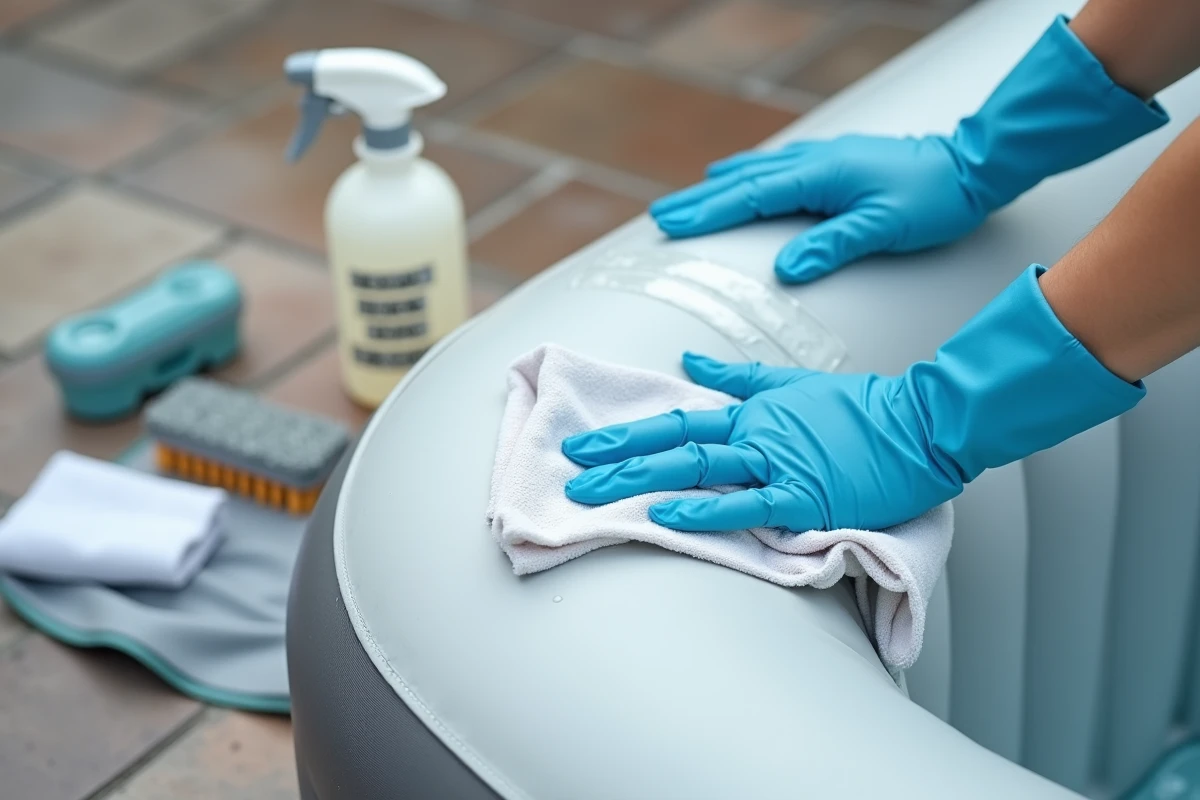
The outer face of the inflatable spa (the laminated fabric surrounding the inflatable structure) reacts differently to chlorine. Its finishing layer, often thinner than the inner coating, quickly whitens upon contact with bleach. For the exterior, a simple mixture of lukewarm water and mild soap is more suitable.
- The motor block and its connections should never be sprayed with chlorinated solution: a wipe with a damp cloth is sufficient
- Cartridge filters should be cleaned separately, by soaking in an appropriate solution or simply replacing them
- The inflation valves require special attention, as dried bleach residue can harden the sealing gasket
Alternatives to bleach for regular spa maintenance
Diluted bleach still has occasional relevance for treating established mold or disinfecting a spa that has been stored for a long time. For regular drainings (monthly or bimonthly depending on usage), other cleaning solutions present less risk to the coating.
White vinegar, provided it is not mixed with bleach, effectively dissolves limescale deposits without attacking the PVC. Baking soda applied as a light paste removes stubborn organic stains from the bottom of the tub. Specific spa cleaners, formulated with a neutral pH, remain the safest solution for maintenance without the risk of degradation.
The choice of product depends on the problem to be addressed. Recurring cloudy water often indicates a filtration or chemical treatment defect upstream, not a lack of cleaning of the tub itself.
Keeping bleach as a last resort option, reserved for situations where powerful disinfection is necessary, helps to preserve the flexibility of the PVC over several seasons rather than having to replace a prematurely weakened spa.