When looking at the official photos of Elizabeth II alongside heads of state or members of her own family, one detail stands out: the British sovereign consistently appears smaller than her counterparts. This recurring observation leads many curious individuals to wonder how tall the monarch, who had the longest reign in British history, actually was.
Royal wardrobe and height: how Elizabeth II compensated for her stature
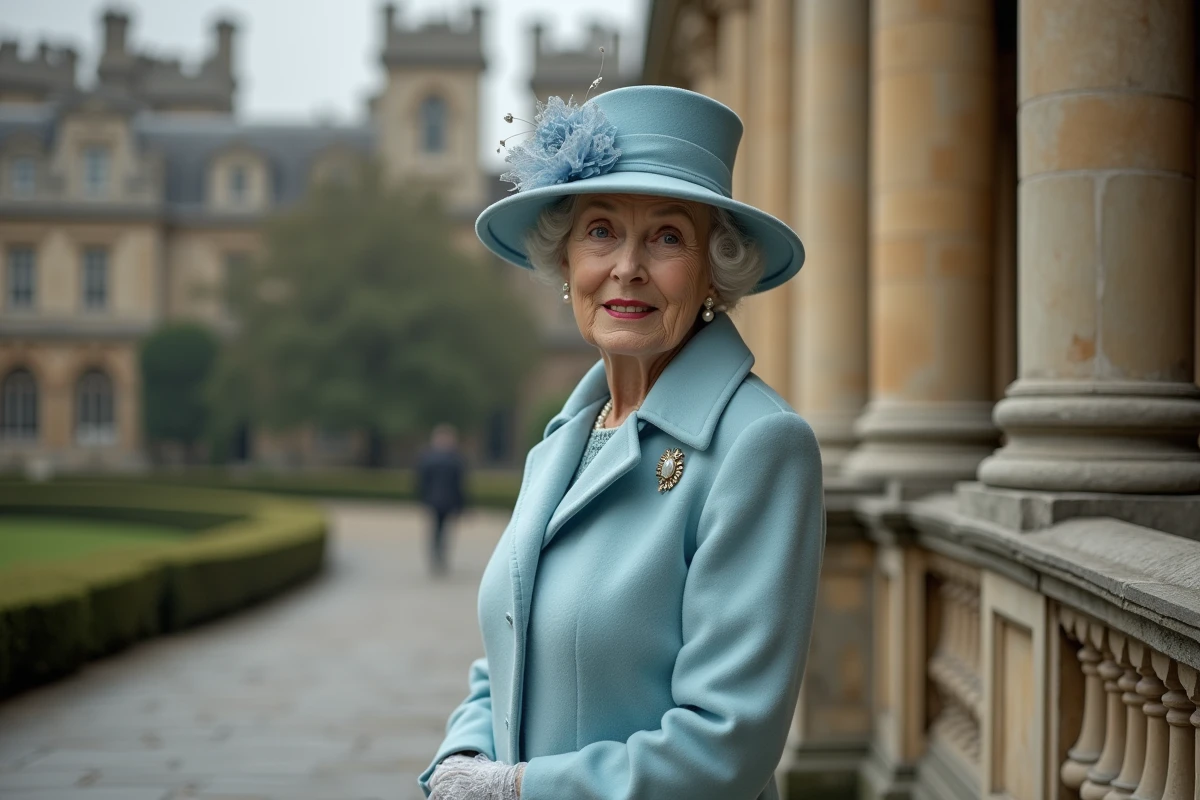
Even before stating a number, one can better understand Elizabeth II’s height by observing her clothing choices. Stylists and royal experts quoted in the English-speaking press explain that her wardrobe was designed to compensate for her small stature. Coats with vertical lines, tall and voluminous hats, bags held in the crook of the arm to avoid breaking the silhouette: every detail served a visibility purpose.
This work on image was not mere vanity. During public engagements, the queen had to remain recognizable among hundreds of people. The bright colors of her outfits, often monochromatic from hat to shoes, addressed this same practical constraint. It becomes clear that knowing the height of Queen Elizabeth II directly sheds light on these appearance choices that marked decades of royal image.
Hats, in particular, played a precise technical role. A headpiece several centimeters high visually added to the sovereign’s stature while adhering to the protocol that required wearing a hat at official events. The monarch transformed a convention into a tool for visual communication.
Official height of Elizabeth II: 1.63 meters in adulthood
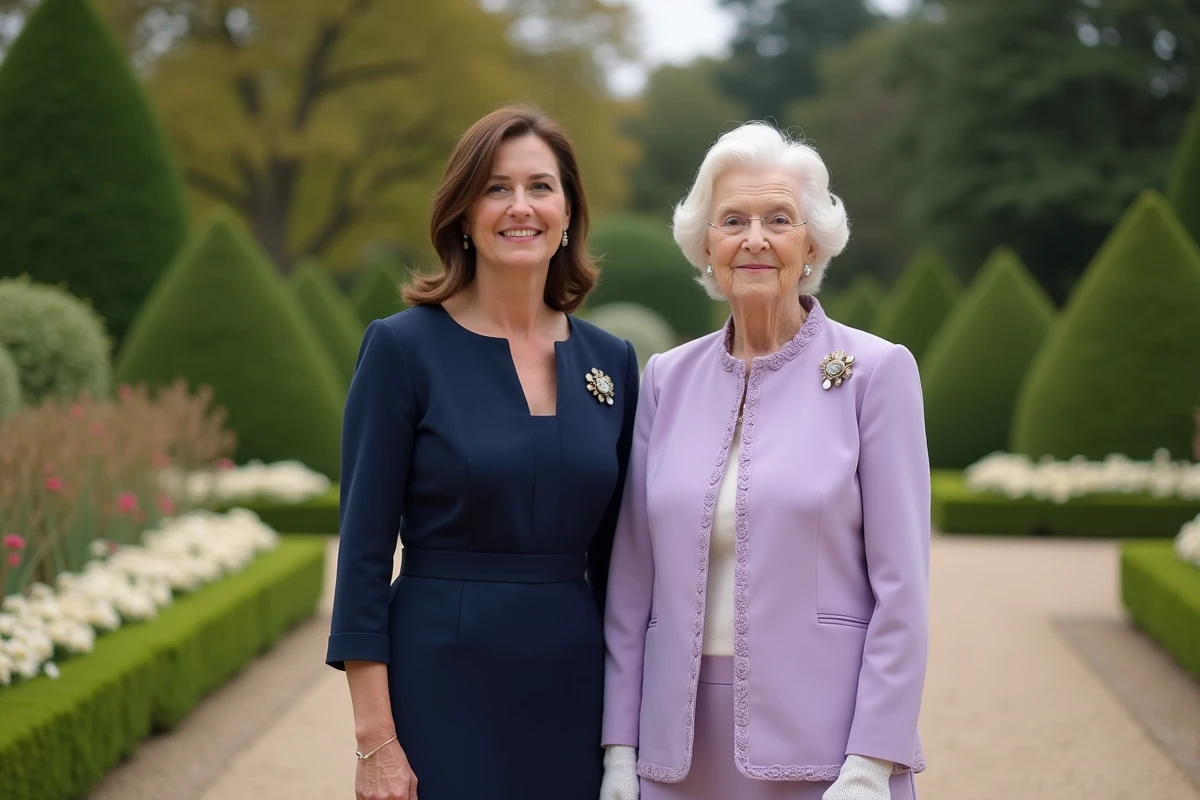
Several British media outlets and reference biographies, including the Daily Telegraph and the Guardian, converge on the same figure: the officially recorded height of Elizabeth II was 1.63 meters in adulthood. This measurement placed her slightly below the average female height in Britain for her generation.
This figure can be put into perspective with other members of the royal family. Prince Philip clearly towered over his wife in official photographs, reinforcing the impression of a queen of small stature. Charles III, also taller than his mother, accentuated this contrast during joint appearances.
Comparison with other monarchs and heads of state
Elizabeth II is not the only sovereign whose modest height has made an impression. Catherine de’ Medici, queen of France in the 16th century, was also known for her limited stature. In contemporary times, the queen found herself alongside presidents and prime ministers of all sizes during her 70 years on the throne, from Winston Churchill to Liz Truss.
This longevity on the throne has also allowed for visual documentation of her physical evolution over several decades, a unique case among modern monarchs.
Loss of height with age: what the British press observed after 2015
One aspect rarely addressed concerns the gradual decrease in her height in the last years of her life. Comparative analyses of official photographs, reported by the British press after 2015, show that Elizabeth II appeared significantly smaller next to Charles III and younger heads of state.
Doctors attribute this change to osteoporosis and spinal compression, two common phenomena in older individuals. The queen, who carried out her duties until the age of 96, did not escape this physiological reality despite ongoing medical supervision.
Concrete impact on protocol in the later years
This loss of stature had direct consequences on the organization of royal events. Adaptations multiplied:
- Reduction in the number of prolonged standing engagements, replaced by seated audiences at Windsor Castle
- Adjustment of platforms and podiums to maintain the visibility of the sovereign during ceremonies
- More frequent use of a cane starting in 2021, which altered her posture and thus the perception of her height
These practical adjustments show that the queen’s height was not a mere anecdotal fact but a real logistical parameter for the royal protocol teams.
Unexpected asset during troop reviews and public engagements
One might think that a modest stature represents a handicap for a figure of state. Testimonies from military personnel and protocol officials published after the queen’s passing suggest otherwise. Her relatively modest height was an asset during troop reviews, as she could move more easily between the ranks and get closer to the soldiers.
This point is rarely mentioned in classic biographical portraits. The guards, standing at attention, had to lower their eyes to meet the gaze of their sovereign. This slight imbalance paradoxically created a form of closeness, very different from the impression of distance that a physically dominant monarch might have produced over their troops.
Physical proximity and public image
The same mechanism worked during public engagements. Elizabeth II could slip among the spectators, shake hands, and exchange a few words without her stature creating a physical barrier. Children, in particular, found themselves almost at her height, facilitating natural interactions that were abundantly photographed.
This practical dimension of her height contributed to building the image of a monarch accessible despite the solemnity of her role. The bright colors of her outfits allowed her to be spotted in the crowd, compensating for what her stature could not offer in raw visibility.
The height of Elizabeth II, measured at 1.63 meters, thus influenced much more than her appearance. From the choice of her hats to the organization of ceremonies, and through the physical relationship with crowds and military personnel, this simple biometric data shaped decades of British protocol. The royal teams transformed this parameter into a controlled communication element, proving that in the monarchical universe, every centimeter counts.