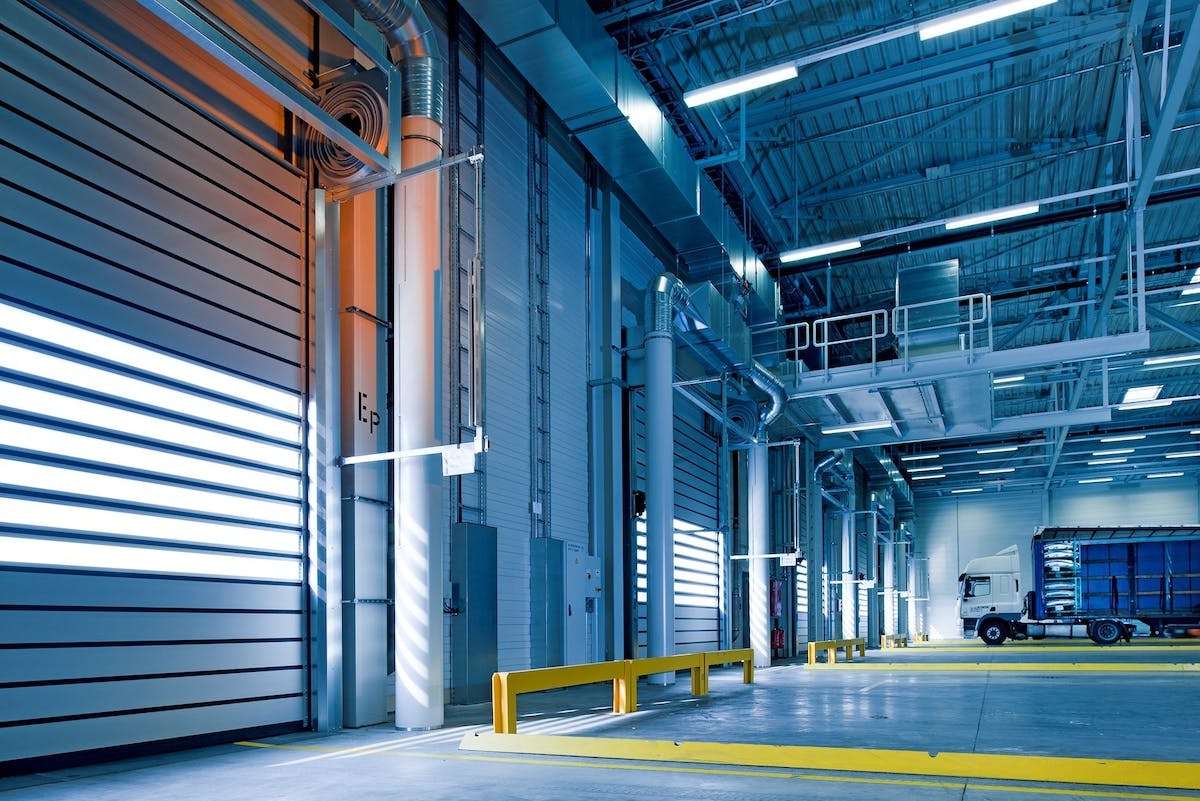
Deciphering the process of evaluating the price of an industrial building requires a deep understanding of the multiple factors at play. It is crucial to consider elements such as location, size, condition of the infrastructure, specific characteristics of the industry, and even current market trends. The role of professional real estate appraisers is also essential in this process, as they bring their expertise and market knowledge to provide an accurate estimate. This complex and dynamic field offers a multitude of interesting perspectives for those looking to understand how the values of these industrial properties are determined.
The Evolution of Industrial Real Estate Appraisal
Industrial real estate appraisal is a concept that emerged with the Industrial Revolution in the 18th century. This era marks the rise of the first factories and brings about a radical transformation in the production and trade of goods.
Over time, industrial buildings have gained complexity due to the modernist architectural advancements of the 20th century. They have become more versatile to align with the constantly evolving industrial needs. Understanding these nuances is essential in accurately determining the price of an industrial building.
Properly setting the price of an industrial building is not a simple task. A multitude of factors must be considered: the nature of the activity to be conducted, geographical location, total usable area for production or storage, and integrated equipment such as an efficient HVAC system or an electrical network suitable for industrial machines—these are all elements that can significantly influence its price.
Moreover, there is a notable variation in the estimation of the ‘industrial building price’ depending on whether it is intended for sale or rental, or incorporated into a broader, more diversified real estate investment. The appreciated value, for instance, if you consider renting your space as a logistics warehouse for a thriving e-commerce business, will differ compared to if you wish to sell your decommissioned factory.
It should be noted that accurately determining the ‘industrial building price’ requires not only sharp real estate skills but also a deep understanding of the specific industrial sector involved. This requirement is even more pronounced with the rise of new technologies that have profoundly altered certain aspects of production and, consequently, industrial real estate.
In summary, understanding how the evaluation of the ‘industrial building price’ is conducted is not only useful for facilitating real estate transactions. It is also a valuable tool for grasping global economic trends. Mastering this value can help anticipate major changes such as industrial relocation movements or the gradual shift towards a greener economy.
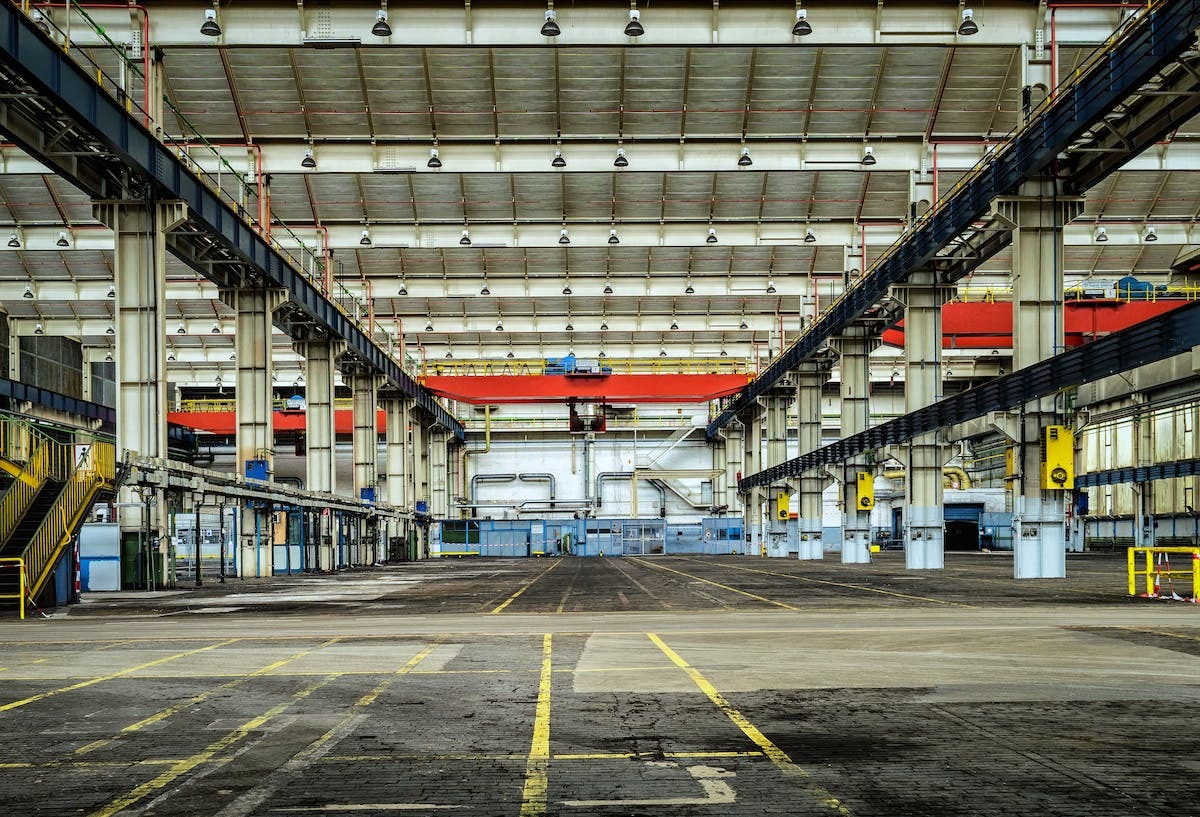
Key Criteria for Evaluating an Industrial Property
When evaluating the price of an industrial building, several criteria come into play. Location plays a crucial role. A building located in a dynamic industrial area well-served by transportation infrastructure will generally have a higher value than one situated in a less economically attractive region.
The total area of the building is also taken into account. The larger it is, the higher the building’s value will be. It should be noted that the quality of the interior spaces is just as important as their size. Modernized facilities with state-of-the-art equipment will be valued more highly.
Another essential element to consider is the overall condition of the building. A well-maintained structure in good condition will have a higher value than one that requires significant work to be refurbished or renovated.
Similarly, access to public utilities such as potable water, natural gas, and electricity can significantly influence the price of an industrial building. If the site has external amenities such as spacious parking or convenient loading/unloading areas, this can also contribute to increasing its value.
Regarding the regulatory and legal aspects related to the industrial building, these are also taken into account during its financial evaluation. The necessary administrative permits to conduct certain types of activities (environmental permits, building permits, etc.) as well as any easements or restrictions on the land can directly influence its value.
The evolution of the real estate market and local economic trends can also play a role in determining the price of an industrial building. A growing demand for such properties in a specific region can increase their value over time.
It should be emphasized that these criteria are not exhaustive and may vary depending on the specific geographical and economic context of each situation. Therefore, the precise evaluation of an industrial building requires in-depth expertise in the real estate field as well as a sharp understanding of the relevant industrial sector.
The evaluation of the price of an industrial building relies on several key criteria such as location, total area, overall condition, access to public utilities, and regulatory aspects. Understanding these elements is essential for accurately estimating the financial value of such a real estate asset.
The Challenges to Overcome in Evaluating Industrial Buildings
The evaluation of industrial buildings presents several challenges that require sharp expertise. You must take into account the specificity of these types of real estate. Industrial buildings are often characterized by their imposing size, architectural complexity, and the specialized equipment they house. This particularity makes the evaluation more delicate, as it is necessary to consider not only the value of the land on which the building is situated but also the infrastructures and facilities integrated within it.
Another major challenge lies in the identification of relevant comparables for conducting a comparative analysis. Indeed, industrial buildings differ significantly from one property to another in terms of area, internal configuration, specific amenities, and even geographical location. You must find similar properties that have been sold recently to establish a reliable benchmark for evaluating the targeted industrial building’s price.
The valuation of special equipment also poses an additional challenge when estimating the overall value of the industrial building. This equipment can be expensive and represent a significant portion of the total value of the real estate asset. The appraiser must therefore possess a deep understanding of the relevant industrial sector to accurately estimate the market value of these specialized assets.
The economic and regulatory environment in which the industrial sector operates can also influence the evaluation of an industrial building. Market fluctuations, legislative changes, or environmental requirements can have a significant impact on the value of these real estate assets. Therefore, you must stay constantly informed about sector developments and adjust your analyses accordingly to ensure accurate estimates.
The evaluation of industrial buildings represents a complex challenge that requires both sharp technical expertise and a deep understanding of the relevant sector. It is essential to take into account the specific characteristics of these real estate assets as well as all contextual elements to arrive at an accurate and reliable estimate of the price of a given industrial building.
The Essential Expertise of Real Estate Appraisers
It requires solid experience in the field of industrial real estate. They fully understand the various characteristics of industrial buildings and their impact on value. This in-depth knowledge allows them to accurately assess each element that makes up the real estate asset, whether it is the size of the land, the structure of the building, or the specialized equipment.
The real estate appraisal expert has the necessary tools and methods to conduct a rigorous comparative analysis. They use specialized databases and regularly consult the market to identify relevant comparable properties. Thanks to their technical expertise, it is essential to trust a competent professional to carry out this complex task of evaluating the price of an industrial building.
The Impacts of a Deficient Evaluation on a Transaction
When a real estate appraisal is poorly conducted, the consequences on a real estate transaction can be disastrous. Indeed, a poor estimate of the price of an industrial building can lead to numerous problems and disputes between the parties involved.
If the price set during the sale is too high compared to the actual value of the property, it can discourage potential buyers. They may then turn to other more competitive options on the market. The seller risks seeing their real estate remain unsold for an extended period, which will incur additional costs such as maintenance or property tax payments.
On the other hand, if the price evaluation is underestimated, it can lead to a significant loss of revenue for the seller. They could thus lose a substantial amount of money that could have allowed them to make a profitable investment later. In some cases where a mortgage has been taken out on the property in question, an undervaluation could prevent its sale as it would not sufficiently cover the existing debt.
You should note that banks and other financial institutions generally rely on the real estate appraisal to determine the maximum amount they are willing to lend to potential buyers. If this appraisal is incorrect and the amount granted exceeds the actual value of the property, it can lead to financial difficulties for the buyer who may end up with a debt greater than the value of their investment.
A poor real estate appraisal can also impact the market as a whole. Indeed, if several industrial buildings are overestimated or underestimated during transactions, it distorts the available data and creates a distortion in prices. This makes it difficult for industry professionals to establish reliable comparisons between different real estate assets.
It is therefore crucial to entrust this delicate task to a qualified real estate appraisal expert to avoid these detrimental consequences on the real estate transaction. Accurate and impartial expertise will provide the parties involved with a clear view of the actual value of the industrial building and thus facilitate the sales process by minimizing potential risks associated with a poor price estimate.